Rhythmical Zones I Batimientos
RHYTHMICAL ZONES
Rhythmical Zones – radiophonic essay by Florencia Curci and Kerstin Ergenzinger, composed through sonic dérives and perceptual tuning exercises along the partially buried waterscapes of Weimar (Germany). The work unfolds in conversation with custom-made wind instruments, built and played to meet both in their beating frequencies and in the rhythms of the players’ breath.
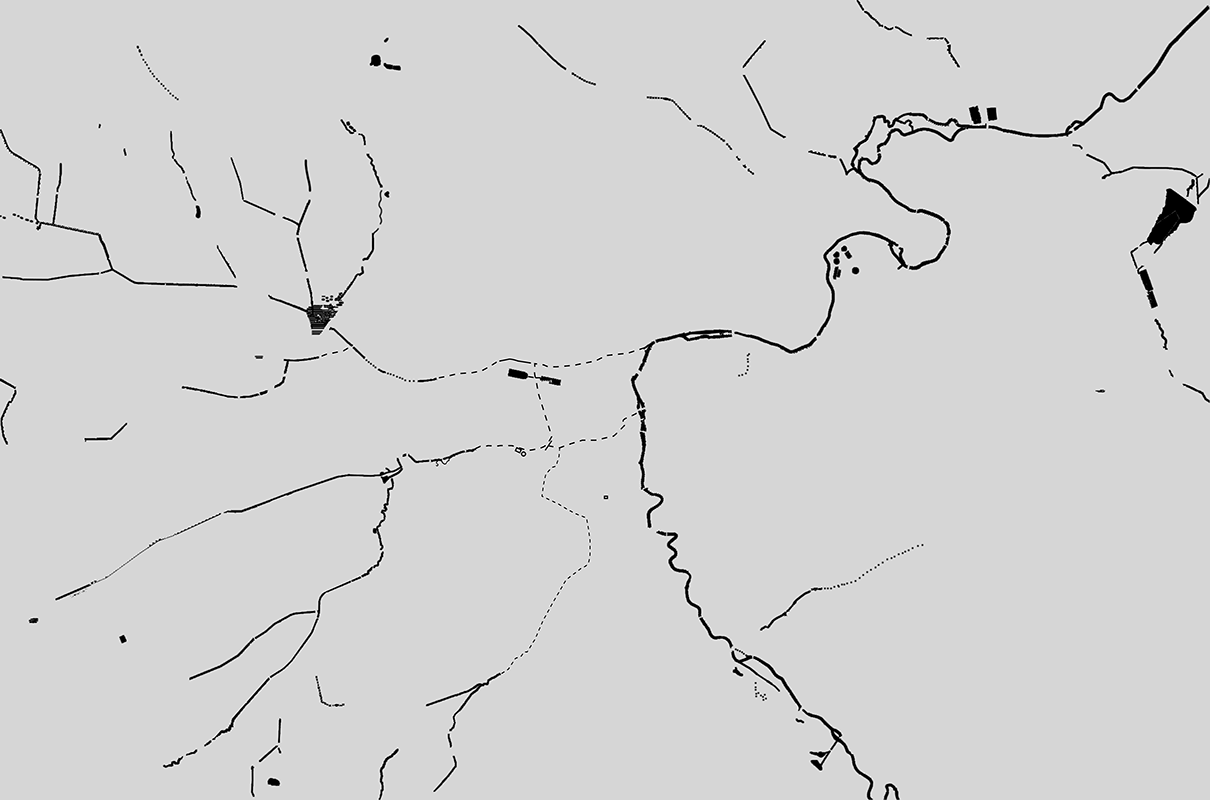
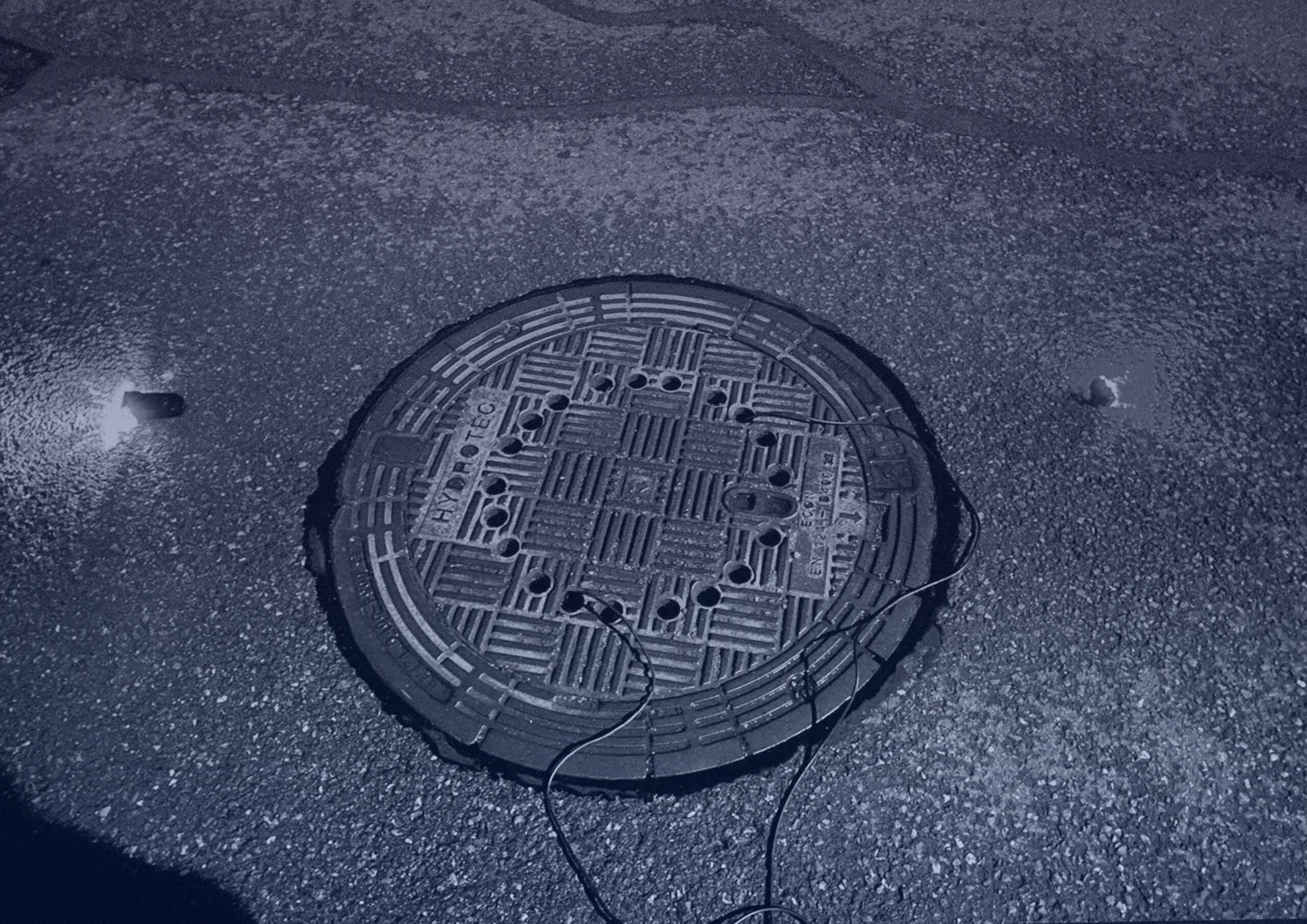
Most of the city’s streams—except for the prominent, manicured Ilm—are channeled underground, hidden by landscape design strategies. Following these submerged flows, the piece opens a contact zone: a space where rhythms from different temporal layers—biological, social, geological—interfere and overlap. It weaves together the sonic journeys of the self-made wind instruments with breath, resonant architectures, and the flows of air and water. These instruments, made from PET bottles, were developed during a previous journey along the waters of the Yendegaia Valley in Southern Patagonia (Chile) and conceived by the artists as tools to cultivate moments of contact.
For those listening away from the field, the piece offers a navigation shaped by these practices—tracing how sound, rhythm, and movement converge in the search for shared points of resonance.
SONIC ISLANDS
Batimientos – Preparing the walk through the Lapataia valley with maps and through the cartographic gaze from afar we strongly felt our foreignness and the valley’s negative space. Its resonance space was an external void. Its prevailing elements seemed to be water and wind.
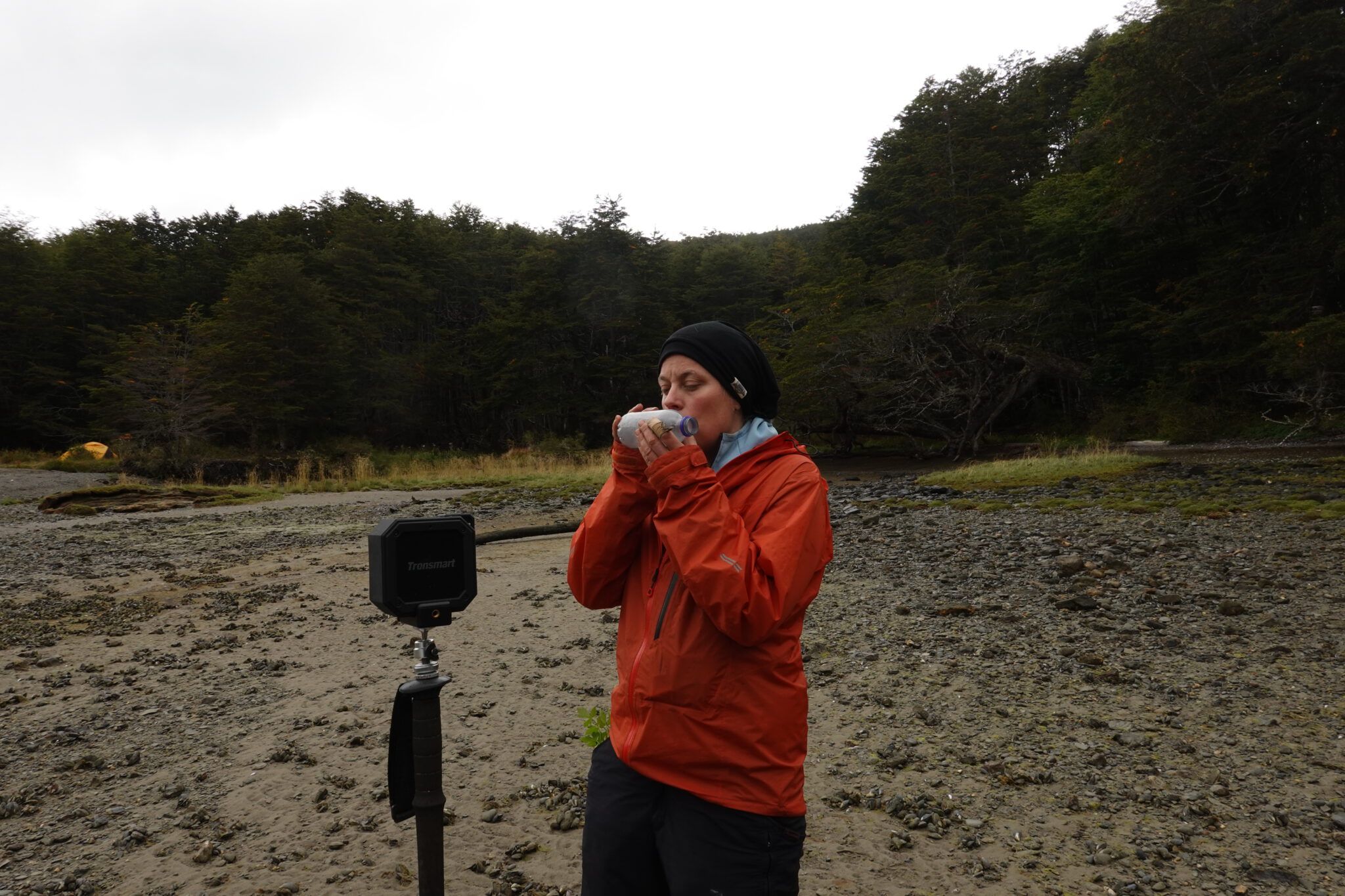
We imagined bodies and voices in the winds. We imagined to join with our breath sounding tones without semantics.
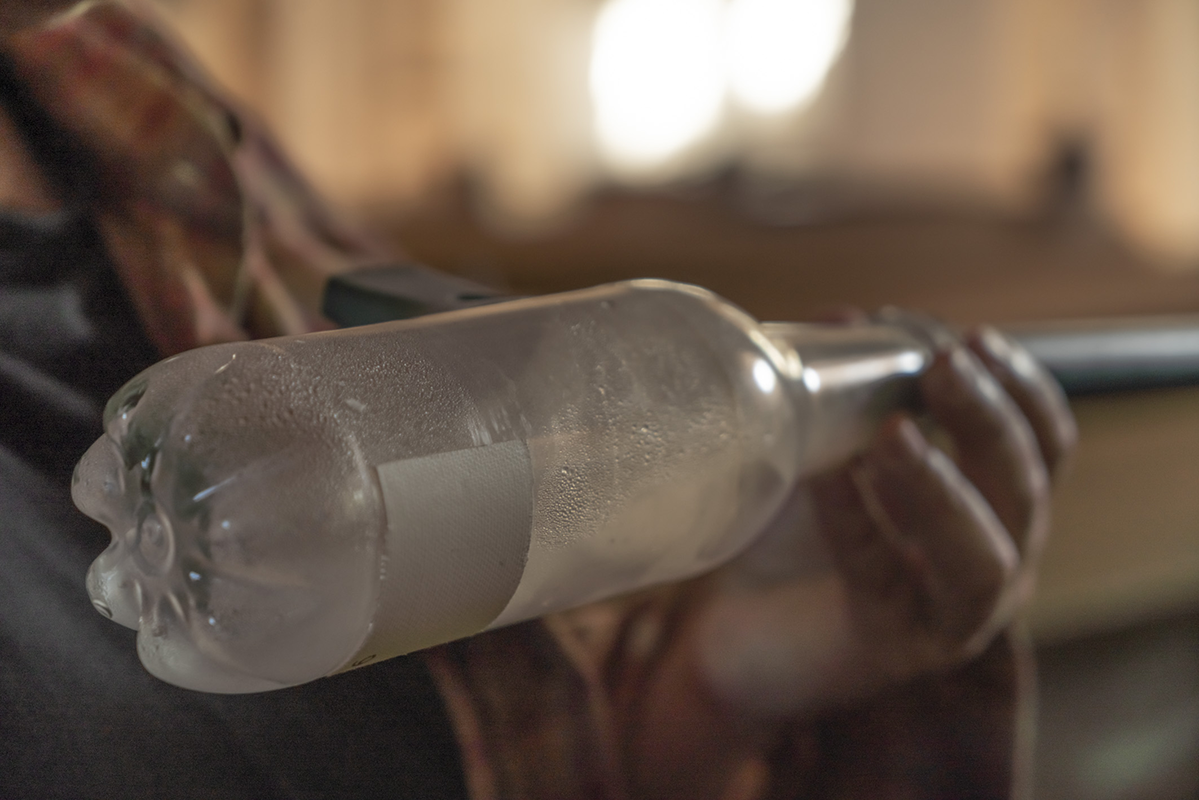
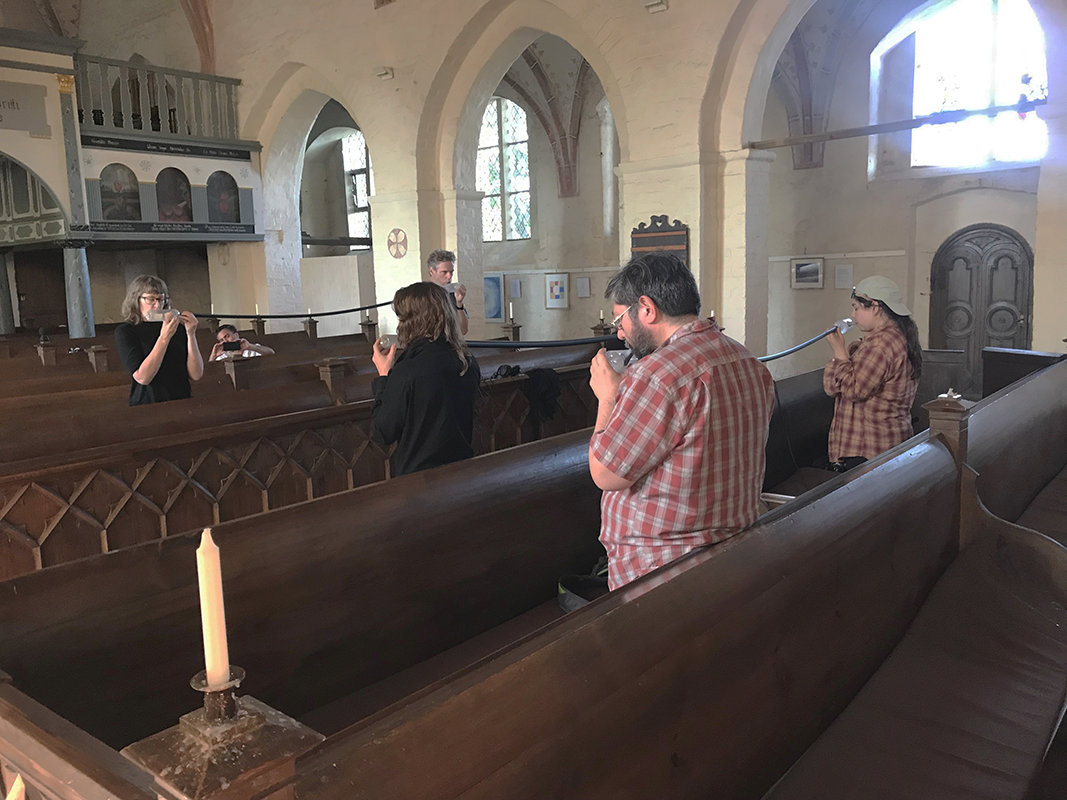
We took a fragmentary wind instrument – a mouthpiece for PET bottles printed in Berlin, and PET bottles from the flight to the southern hemisphere – the ubiquitous resonance chambers of our times.

As planned, we would start separated in two groups from different entry points into the valley. The aim was to meet at the Lapataia River and continue together to Bahia Blanca.
The two of us started in different groups, how would our first different encounters with the places be, when and how would we actually manage to meet?
The valley is part of the so-called “intercultural contact zone” (Selk’nam, Kawesqar and Yagán) located in Yendegaia National Park (YNP).
What is a contact zone? A zone where prior separated entities have a possibility to meet.
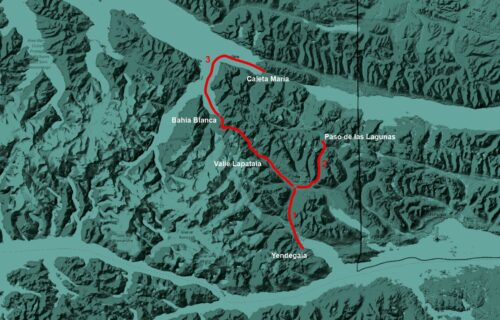
The valley is a walkable cut in the ice covered mountain ranges.
A passage between different communities in the past.
A meeting, a hike along the old suggested passage to activate its cultural presence.
A collective practice of an interdisciplinary and intercultural contemporary group upwards the Lapataia river.
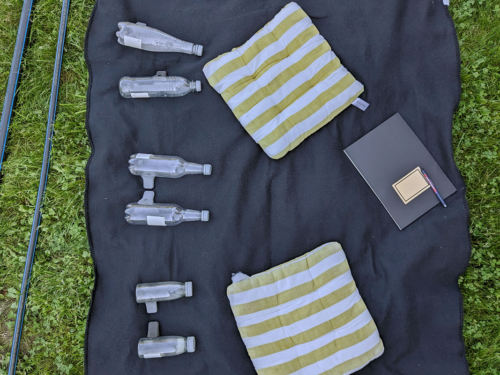
Towards Rügen, more mouthpieces and instruments were built and bottle pairs selected.
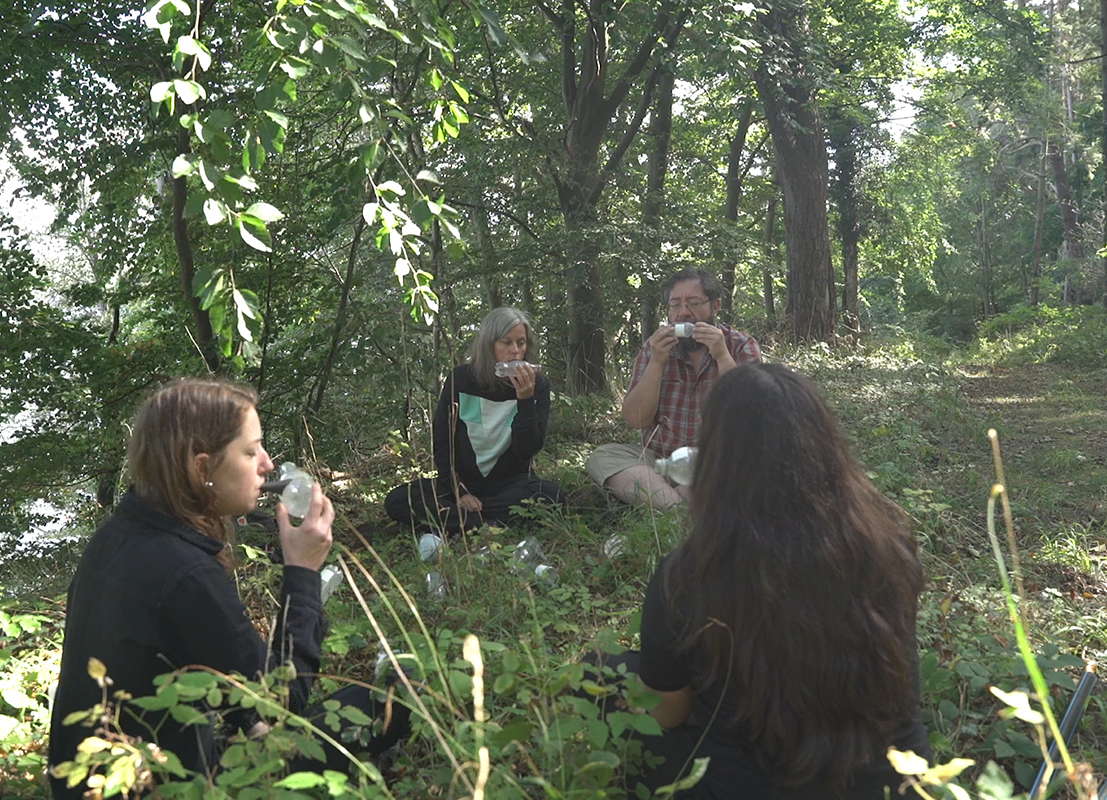
In Rügen we continued and deepened the research and exercises to finally include others and practice together.
What would one essence or principle of contact be?
Batimientos – Schwebungen – Sounding tones without semantics.
When two close-by frequencies physically meet, they start to beat and a prior non existing
third entity emerges.
Breath and Beat
Always play in a duo
Breath in a continuum with your partner, taking turns
Find the beating
Sustain the beating as long as possible
Stop when the continuum is broken
Session of duo beating pairs inside small garage. Gut Glowitz. 12.9.2023Gut Glowitz duo Nr. 5/6 study of batimientos – Schwebungen 0913 + tuning hole 12.9.2023
Signals (for overblowing)
Play an overblow. Wait after each signal as long as its resonance fills the landscape. When you can’t hear the signal anymore, play a new one.
Variation: play as a duo when you don’t see each other.
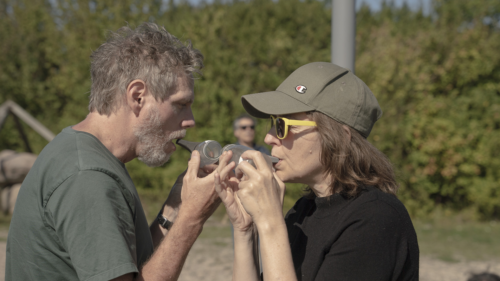
Connected air flow
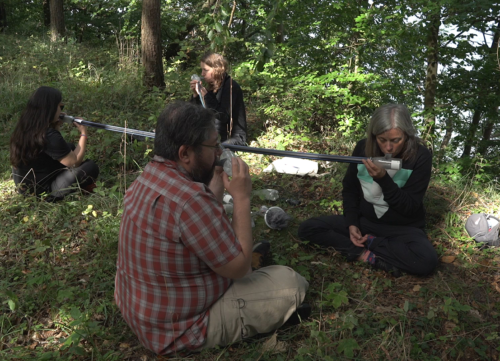
Play in duos. Connect both instruments with a pipe. Breath in turns. Listen to the variations that emerge from the circulating air flow. Observe how the labium and window of your mouthpiece turn into the tone hole of your partner’s instrument.
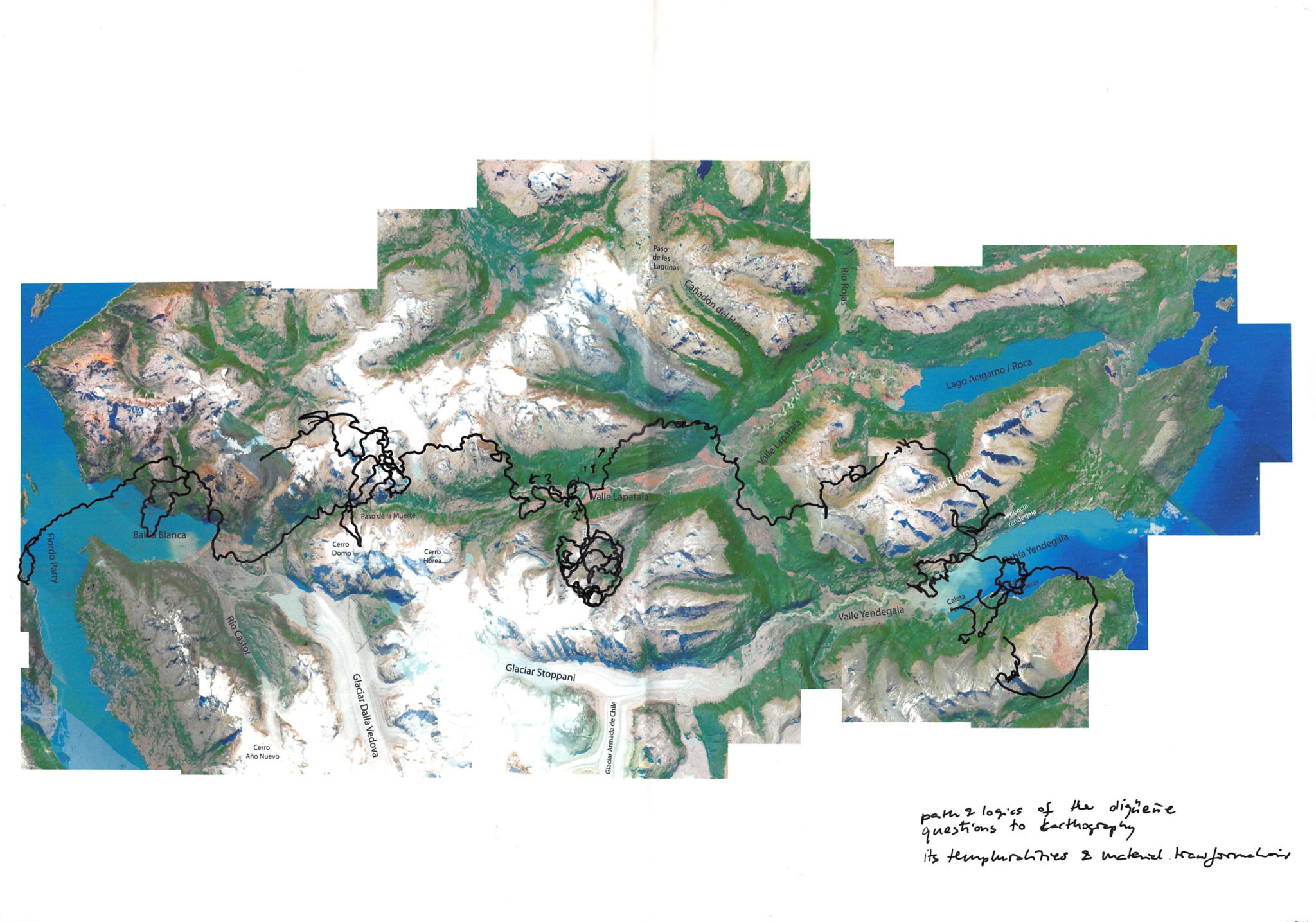
Walking along a border is the same as following any other path or track. While walking you start inhabiting a zone. This border path is unmarked, there is no trail, only a direction across country. You might think that you are following a line, but you have entered a multiplicity of presences, an ecological continuum, where past, present and future intertwine cross-linking animate and inanimate beings and surroundings.
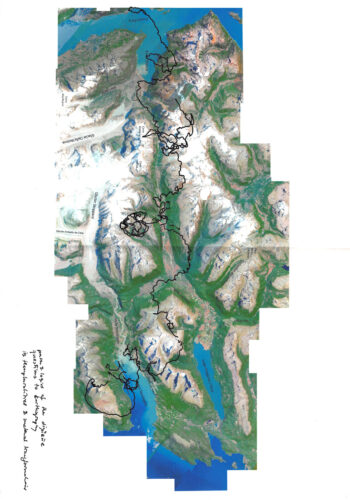
A map might imprint and impose a line. Yet it is a zone, a co-habitat for many. For example, the omnipresent Nothofagus parasite: Cyttaria Hariotii, Digüeñe or Pan del Indio. Both ancient and contemporary. It is populating a tree species that has already been traveling to Australia via Antarctica and back to the Southern Americas through geological times far beyond the scales of human beings’ temporal perception. Both the tree and its parasite don’t care about lines or limits as long as they are surrounded by their natural resources. The fungus needs the tree. The tree needs the ecology of the extended areas of southern South America. The parasite transforms the tree’s wood rigorously into tumors of hardened, criss-crossed wooden fibers. And its ubiquitous fruits build up significant parts of the decomposing permeable soils, through which the tree loves to grow its roots.
The parasitic fungus embodies an alternative logic, subtle and powerful at the same time. A relentless inviting call to think, inhabit and realize the world differently.
“The parasite is a microbe, an insidious infection that takes without giving and weakens without killing. Whether it produces a fever or just hot air, the parasite is a thermal exciter. And as such, it is both the atom of a relation and the production of a change in this relation.” *
A cascade of parasitic processes and relationships is at work. Inside the fungus, lives a fly – a fungus gnat from the family of Mycetophilidae. They have populated the planet, at least since the ‚Kreide‘, the Cretaceous period 145 Million years ago. The gnat is less picky than the Cyttaria Hariotii. Not only one species but many serve as their host. A myriad of open doors and richly laid tables.
No passage yet for the Cyttaria on a Nothofagus to the northern hemisphere. Yet the gnat travels the globe since millions of years. Some rest in the amber of the Baltic Sea. The Nothofagus from these archipelagic islands is the Beech tree.
Be it the Beech or the Nothofagus, often the gnats gather and hide in great numbers under the trees’ roots and holes. They are the most common in all forests around the globe. Small in size, inconspicuous in coloration they are rarely known or noticed guests. Yet their larvae are well known on the laid tables of other guests – you: the mushroom eater. Now you’re the parasite and you must be fast to digest the mushroom with the still tasteless, invisible eggs.
*Lawrence R. Schehr in Michel Serres, The Parasite, Translator’s Introduction, University of Minnesota Press, 2007
Text & Drawings: Kerstin Ergenzinger
Collaboration Performance Research Sound Work
collaborative research with Florencia Curci
The radiophonic essay was supported by Terra Ignota and the Professorship of Acoustic Ecologies and Sound Studies at Bauhaus-University of Weimar.
Batimientos & Path are part of and supparted by Terra Ignota.